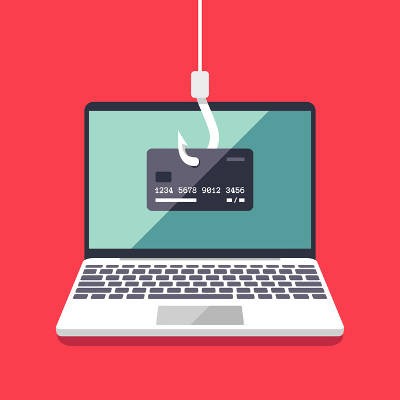


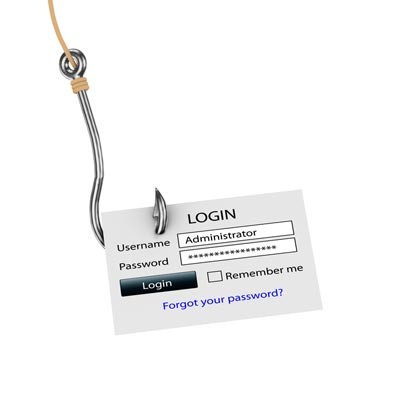
Hackers are always trying to find creative and new ways to steal data and information from businesses. While spam (unwanted messages in your email inbox) has been around for a very long time, phishing emails have risen in popularity because they are more effective at achieving the desired endgame. How can you make sure that phishing scams don’t harm your business in the future?
Global Tech Solutions Blog
Passwords are all over the place these days, whether they’re required to access an online account, or access the devices used to open these accounts. While both types of passwords can make for ideal security conditions, this is only the case if the passwords are strong. If your passwords can be guessed by just about anyone, can you really call it a security measure? New insights from SplashData show that passwords aren’t being considered as much as they need to be.
As invaluable as the security solutions that protect a network are, they can be effectively rendered useless if a cybercriminal is skilled in social engineering. Social engineering is the practice of using manipulation to access protected resources, as we will review later. If your business and its team are vulnerable to a social engineering attempt, you are missing a critical piece of your data security strategy.
When so much of what we write is about the threats and attacks that exist (and are carried out) in cyberspace, it is particularly refreshing when we can discuss those responsible for these attacks in the context of their legal proceedings. For example, today we are able to discuss how actors in some of the biggest recent cybersecurity events have entered guilty pleas.
Connectivity is one of the major benefits of mobile technology, but some developments have taken this aspect to crazy (and borderline ridiculous) heights. The Internet of Things is forcing businesses to rethink the conventions of connectivity in ways which previously weren’t particularly necessary. Unsurprisingly, the Internet of Things is forcing business owners and normal users alike to remain skeptical of connected technology to a certain degree, and a survey from Cisco showcases this trend perfectly.
2018 could potentially be a big year for your business. However, your business needs to be around long enough to see any positives that may come its way, which means you need to be prepared for the negatives. Here are five resolutions for you to make this year to help preserve your organization’s cybersecurity.
This Christmas, technology is everywhere. Traditionally, the holidays were a time when things slowed down for businesses and people spent time with their families and put their work on the back burner. Those days are over. Today’s professional is lucky to get a day off for Christmas; and, because of the way business works today, may be asked to do more than ever around the holidays.
Few security problems are more dangerous than a network breach. Considering how much you could lose from an unexpected bout with a hacker, it’s no surprise that businesses are concerned. Yet, even some of the most troublesome threats like phishing attacks are often ignored. A new study introduces the groundbreaking thought that phishing attacks should be at the forefront of a business owner’s mind regarding network security.
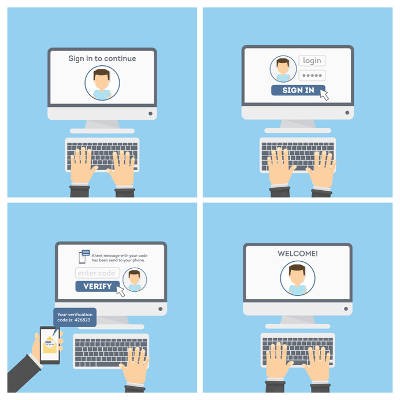
Data security has to be a core consideration of the modern business, so every small effort you can take to protect your business is important. One such effort is the implementation of two-factor authentication. However, your employees may not initially feel entirely comfortable with some facets of two-factor authentication.
While many might see having a credit card stolen as identity theft, this is an oversimplification that can prove dangerous. While credit card theft can be an element of identity theft, equating the two means that other forms of identity theft are overlooked. In today’s blog, we’ll go over why identity theft and credit card theft aren’t exactly the same thing, and what you can do to help keep your business safe from damage.
Insider threats contribute to a significant number of data breaches. These cases of data exposure are enabled by a member of your staff, whether they intended to harm your business or simply made an honest mistake. With so much focus directed toward the threats out in the world, sometimes we forget that the biggest dangers can be among our ranks. To make up for this, we’ll discuss a few ways to keep insider threats from doing your business too much harm.
The ability to vote is considered one of the great rights in the world, putting one’s voice and opinion into action to shape history. However, it has been demonstrated that the electronic voting machines that some states in the U.S. use simply aren’t secure enough to ensure that the democratic process is preserved.
There are many organizations in the world that simply can’t have cybercriminals and hackers interfering with their data. One of these organizations, CERN (whose acronym translates to the European Laboratory for Particle Physics) has far too powerful of a computer grid to allow hackers to access it. To keep it safe, CERN has deployed what may be the future of cybersecurity: artificial intelligence.
Considering how often hackers target financial credentials like credit card numbers and expiration dates, it’s not surprising that ATMs can provide a wealth of information to them. Hackers are willing to go exceedingly far just to get their hands on these credentials--including physically altering the devices themselves to install skimmers and other technology on them. Unless you know what to look for, it can be difficult to tell if a machine has been tampered with.
A surprising number of security issues come from inside your organization. User error on the part of the employee can present major problems for your workflow, data security, and the integrity of your business. User error could be something as simple as an employee clicking on the wrong links when they receive a suspicious email in their inbox, or if they are accessing data that they simply have no business accessing in the first place. Sometimes businesses will even completely forget to remove employee credentials when they leave a project or the company creating a breachable hole in your network. Regardless of the reason, user error can be a detrimental occurrence, and one which must be prepared for.
Most small businesses don’t have the luxury of an in-house IT department. Even if they do have one, it’s likely a small department run by a handful of folks who have their hands full with either implementation projects or simply staying afloat. With opportunities to invest in the improvement of your infrastructure few and far between, a network audit can help you identify where your network suffers most, and what you can do about it.
If you’ve watched the news lately, chances are you’ve seen the Equifax breach and the ridiculous fallout it has caused. Over 133 million personal records have been stolen. While it’s difficult not to feel individually victimized by such a breach, it’s important to remember that it’s often not your specific credentials targeted by hackers. Since businesses often hold onto valuable information, they have big crosshairs painted onto them. It doesn’t even stop there--any vendors or partners you deal with are also in danger of hacking attacks.